
Abandonment Issues
How to emergency evacuate and then reluctantly return a whole population.

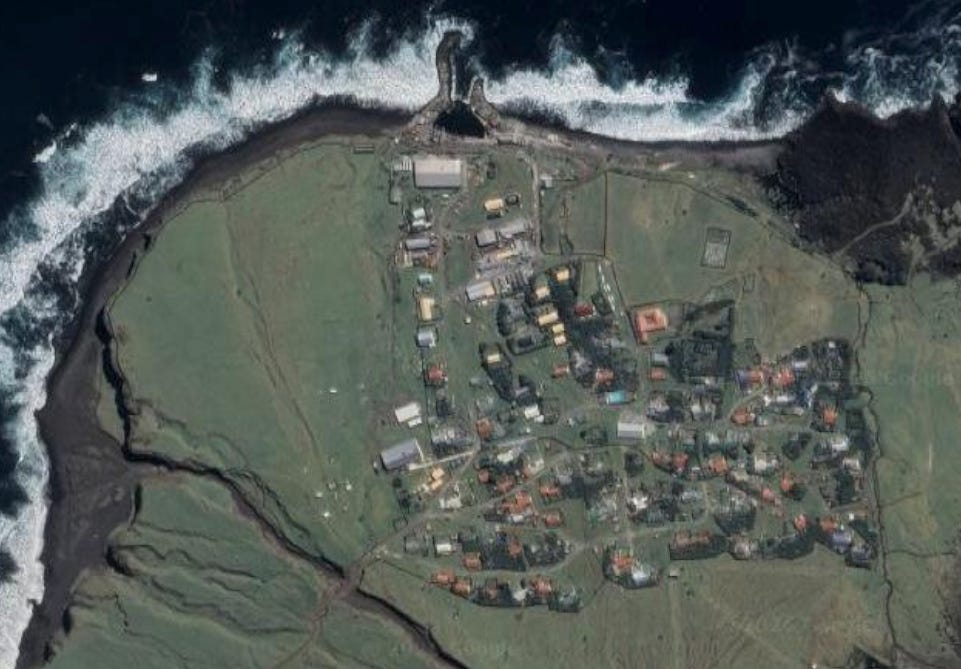
As discussed, I am currently in the trenches of writing and editing a new podcast investigation series. Being on tight deadline, I’m naturally very much in the market for distractions, side-stories to ponder, and middle-distances to stare into.
One of the many facets of teeny tiny, super remote British Island life that has had me hooked is the nature of their Britishness.
It is often said that those living on the Falklands are “more British than the British”. I talked about this recently with my Sunday Times colleague Matthew Campbell. He’d just been to the Falklands, in the wake of a leak from the US Pentagon suggesting they could withdraw support for British control. He met weeping veterans, penguins and even Argentine tourists.
But what about the places which haven’t been invaded? Where does the balance lie between the draw of Britain and the attachment to your homeland/homeisland?
As various parts of the inhabited Atlantic were panicking about Hantavirus, I was more giddy than a grown man should be to see TV pictures of six paratroopers and two medics from the 16 Air Assault Brigade parachuted onto the golf course of Tristan Da Cunha.
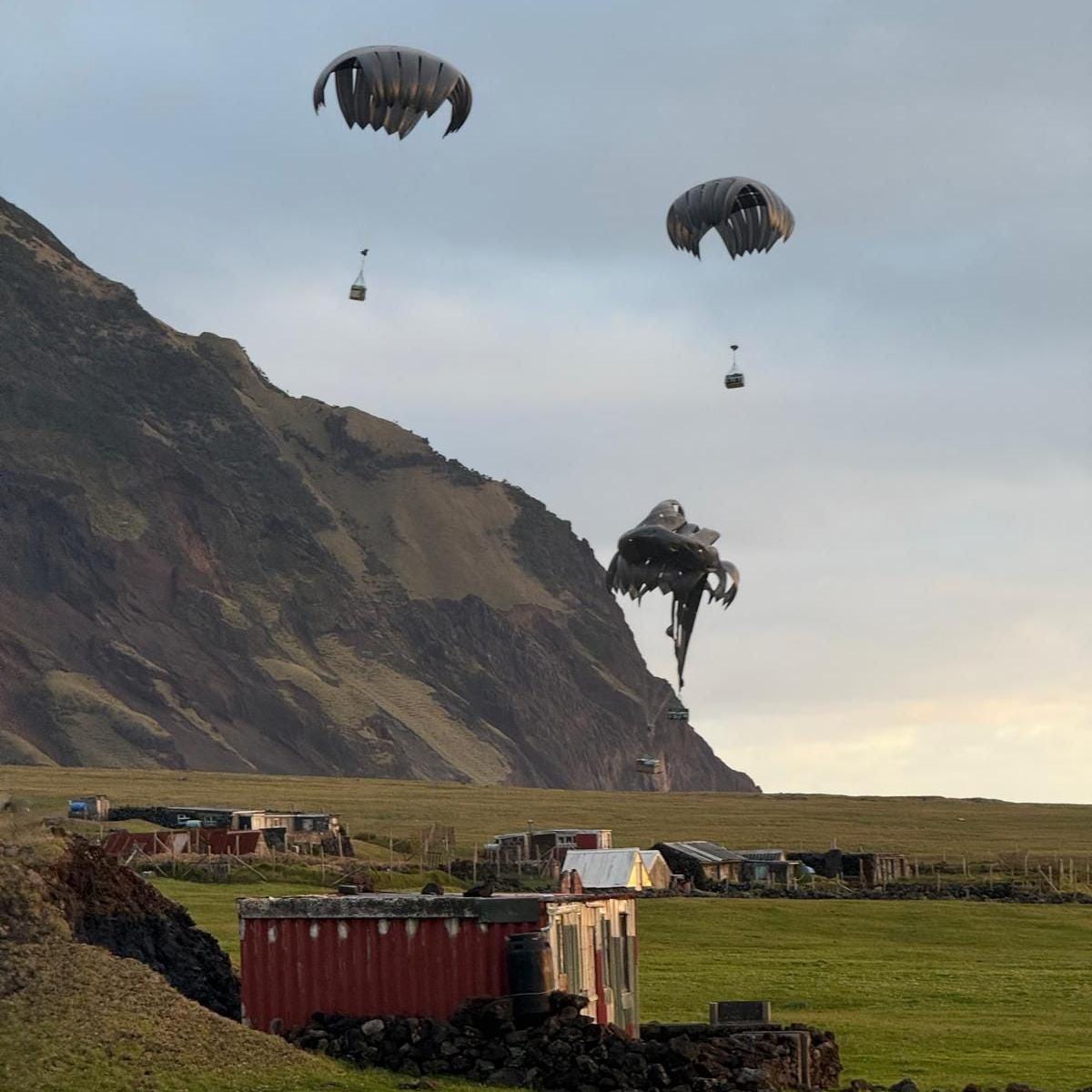
Tristan is teeny, tiny, remote and British. Tick, tick, tick, tick.
250 British citizens live there, it is extremely hard to travel to and…has a golf course?Who did the town planning, Donald Trump?
He would be very onboard with their Royalism. If you were thirsty for a pint after your 18-hole course, you might have a drink at the Prince Phillip Hall. You might even assume they’re British from their accent. It’s an archaic form of cockney, thanks to the troops who annexed the uninhabited island in 1816.
But many decades ago these Brits had a taste of Britain itself, and - largely - hated it.
In 1961 the 289 people on Tristan Da Cunha started to notice a worrying bulge on the hill overlooking their only town Edinburgh of the Seven Seas. Bearing in mind Tristan is basically just a big volcano - very Bond-villain lair in vibe - this was especially worrying.
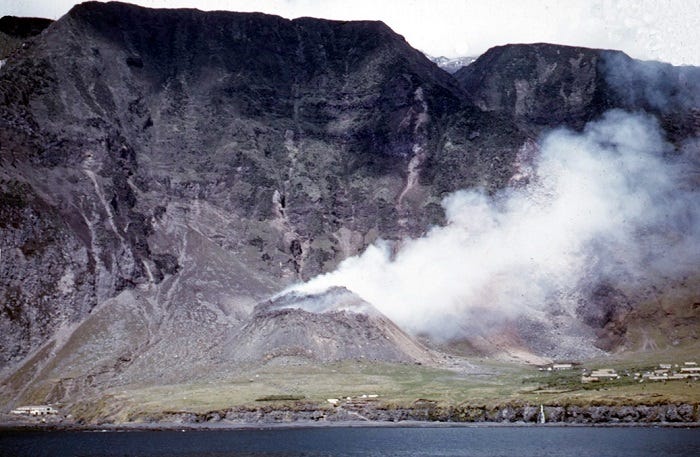
It got to a point where the mountain rump was growing 5ft an hour, so one night “like small flocks of migrating night-birds”, one contemporary writer noted, “the families from the east side carried their babies and bundles towards the west”.
Another writer described it as a “telepathic mass movement…no order had been given, no word passed down”. They just knew they had to get out of Dodge.
In the first instance that meant heading away from the volcano.
“I saw big boulders being thrown out of the volcano. They was shooting out and rolling down the hillside above the settlement Road” one person told The Times.
The second eruption was bigger and began at 2am. A ship (the Tristiana) waiting off shore saw it happen, and lit flares and got on the radios to try and wake and warn those ashore.
One person on island later recalled; “I shall never forget the sight of men huddled around our small radio transmitter, talking to the Tristiana and hearing that our volcano was now erupting in earnest.”
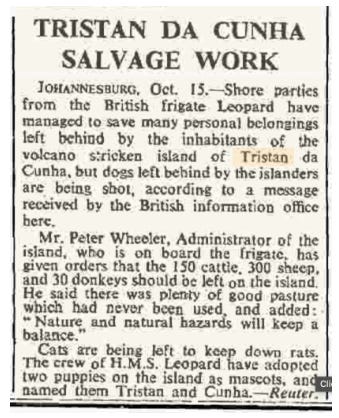
As the volcano erupted, a ship arrived just in time to help evacuate the entire island. Homes were left with dinner half-prepared on the table, potatoes were left half-peeled, teapots half drunk. And the dogs were all shot to give the remaining livestock a fighting chance. Two puppies were taken and named Tristan and Cunha.
The closest uninhabited island was called Inaccessible. Which is not what you want to hear when fleeing lava. They travelled a nautical mile further to Nightingale to regroup. A contingency store left there was cracked open, giving them tea, coffee, biscuits, potatoes, and old bird fat to cook new birds in.
This island population wasn't thrilled to be leaving home. They weren’t thrilled with being dropped in Hampshire either.
The island administrator, a guy called Peter Wheeler told the press on his arrival in England: “the island is dead, finished. I don’t think anyone will want to live there again”.
What to do with these islanders, though?
Slowly a Coronation Street-looking row of former armed-forces homes on a former RAF base in Calshot, Hampshire turned into the new Tristan Da Cunha. They had to get used to cars, pavements, record players. This population had never seen cars or pavements. Lessons were given on how to use gas cooker and home electrical wiring, but it was an uphill struggle.
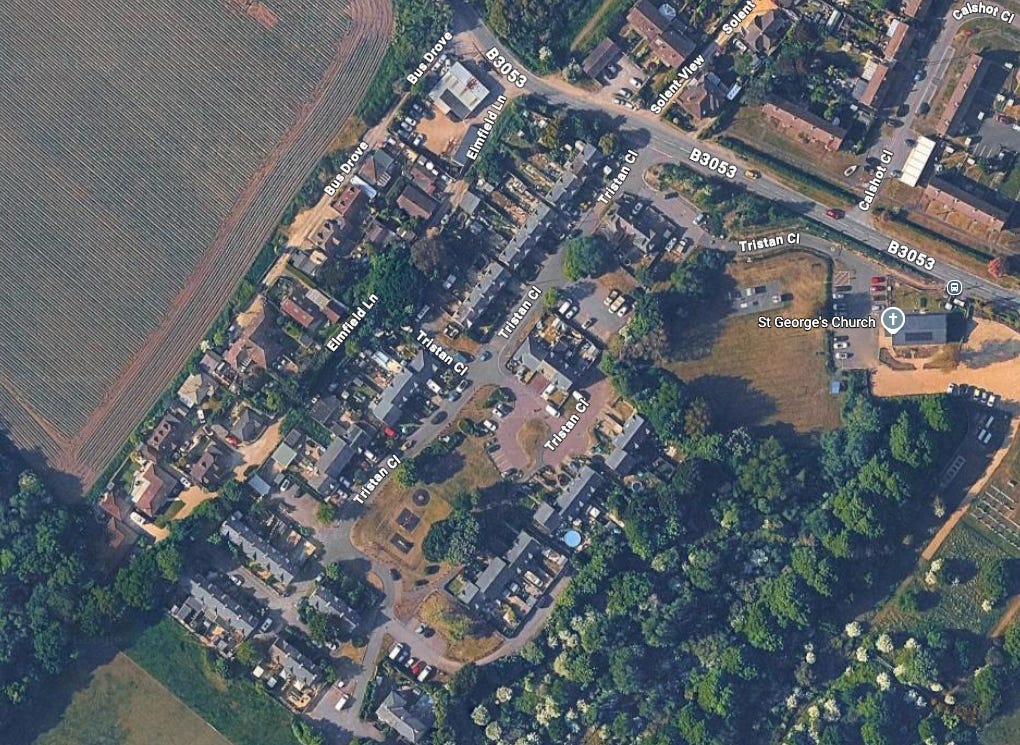
“Not a day passed in that miserable army camp in Surrey unless somebody - man or woman - broke down in tears”, one visitor noted.
The good islanders were also too trusting for mean England too. They soon discovered that if, for example you leave all your bags outside the shop you’re popping into, they won’t be there when you emerge. As news started to emerge that the volcano had subsided and for the most-part their homes were intact, islanders wondered if they could return.
"England is cold”, one former-islander told a newspaper reporter.
“Yes, we’ve got problems on Tristan, just like we’ve got problems here. But we know what our problems are and we chose them.”
A referendum was held two years into their England stay and… almost every single islander decided to leave.
“In England its money, money, money, worry, worry, worry, all the time”, another islander told the New York Times upon their departure.
They returned - en masse - and and the population has been slowly and quietly doing its thing ever since.
The aforementioned new podcast series about another British island community will be out later this month. So, in readiness, why not subscribe to this Substack and I’ll bombard you with relevant content, curiosities and links in the fullness of time.

When I’m not bothering small islands for critically-acclaimed podcast(s), I’m hosting news programmes for the BBC World service, I host The Times and Sunday Times’ flagship news podcast The Story, and with Poppy Damon I host Strangely, where we swap crackers stories from either side of the Atlantic.
www.jonesluke.co.uk